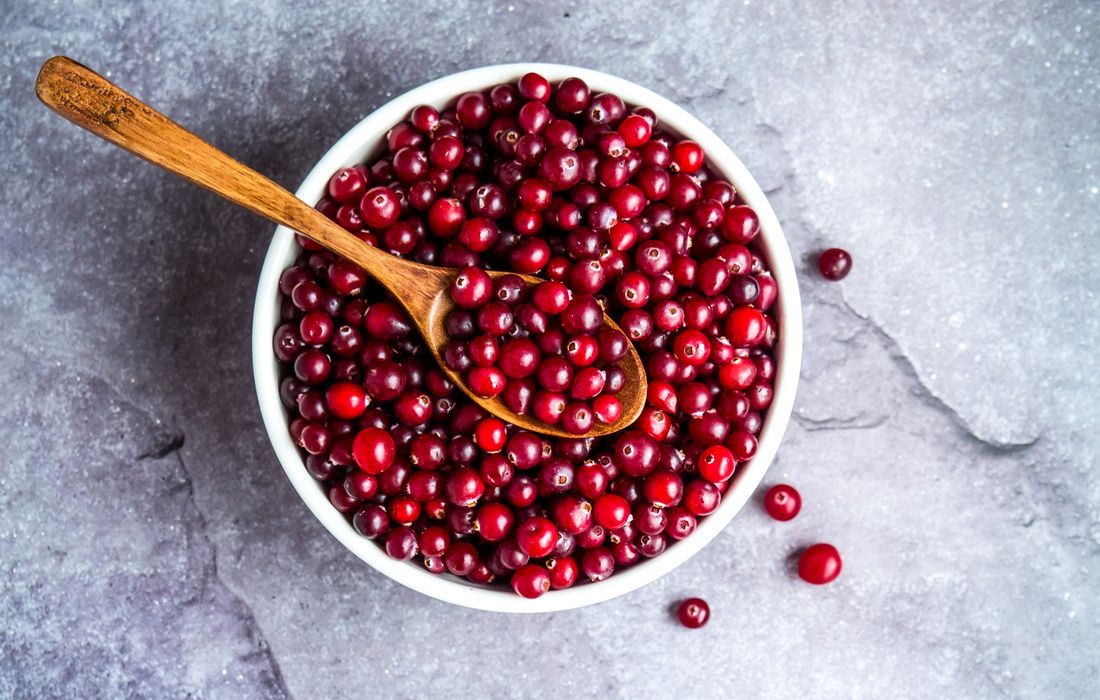
fresh cranberries
Fresh cranberries (Vaccinium macrocarpon) are small, bright red berries with a distinctly tart flavor and an unusually diverse polyphenol profile. Native to North America, cranberries are especially notable for their A-type proanthocyanidins, a less common form of proanthocyanidin associated with their well-studied urinary tract benefits. They also provide anthocyanins, flavonols such as quercetin, and hydroxycinnamic acids.
Unlike sweetened dried cranberries or cranberry juice cocktails, fresh cranberries contain no added sugar and provide fiber, vitamin C, and a broad spectrum of protective plant compounds. Research on cranberries has focused particularly on urinary tract health, while emerging studies are also examining their effects on the gut microbiome, cardiovascular function, glucose regulation, and inflammatory signaling.
fresh cranberries
Fresh cranberries (Vaccinium macrocarpon) are small, bright red berries with a distinctly tart flavor and an unusually diverse polyphenol profile. Native to North America, cranberries are especially notable for their A-type proanthocyanidins, a less common form of proanthocyanidin associated with their well-studied urinary tract benefits. They also provide anthocyanins, flavonols such as quercetin, and hydroxycinnamic acids.
Unlike sweetened dried cranberries or cranberry juice cocktails, fresh cranberries contain no added sugar and provide fiber, vitamin C, and a broad spectrum of protective plant compounds. Research on cranberries has focused particularly on urinary tract health, while emerging studies are also examining their effects on the gut microbiome, cardiovascular function, glucose regulation, and inflammatory signaling.