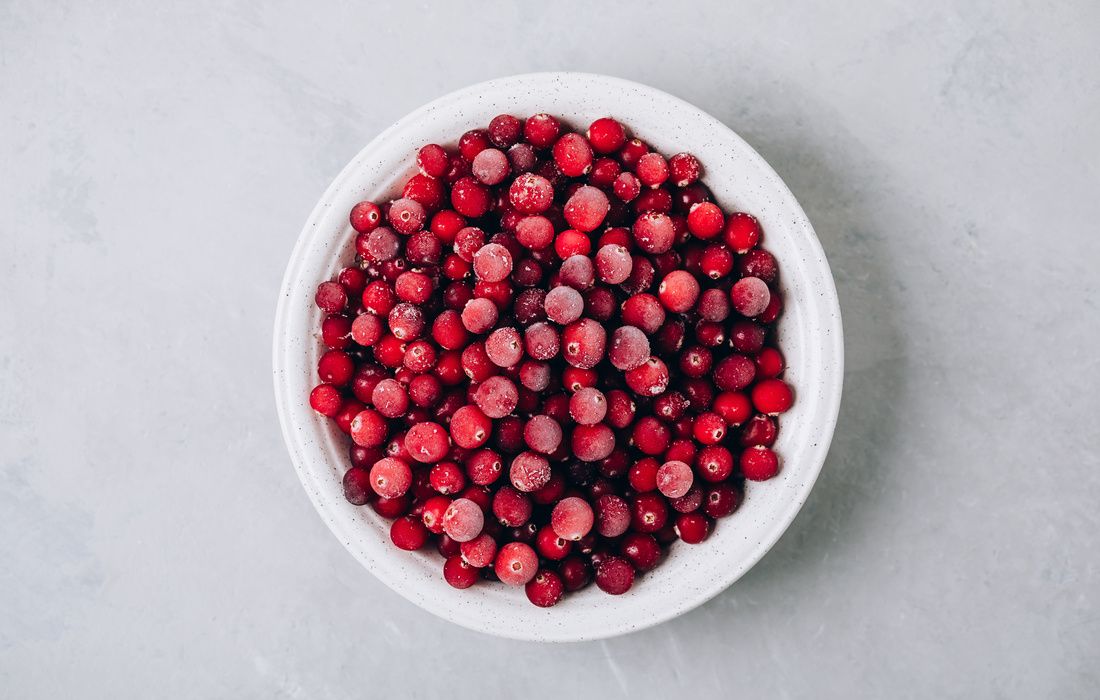
frozen cranberries
Frozen cranberries (Vaccinium macrocarpon) are typically frozen soon after harvest, providing a convenient way to enjoy cranberries throughout the year while retaining their fiber and diverse array of protective polyphenols. Their naturally tart flavor and deep red color make them especially useful for smoothies, sauces, relishes, baked goods, and holiday recipes.
Like fresh cranberries, frozen cranberries are particularly notable for their A-type proanthocyanidins, along with anthocyanins, flavonols such as quercetin, and hydroxycinnamic acids. These compounds are being studied for their roles in urinary tract health, vascular function, gut microbial ecology, metabolic health, and inflammatory signaling. Cranberry polyphenols are relatively resilient compared with those in many other berries, although individual compounds—especially anthocyanins—can gradually decline during processing and extended storage.
frozen cranberries
Frozen cranberries (Vaccinium macrocarpon) are typically frozen soon after harvest, providing a convenient way to enjoy cranberries throughout the year while retaining their fiber and diverse array of protective polyphenols. Their naturally tart flavor and deep red color make them especially useful for smoothies, sauces, relishes, baked goods, and holiday recipes.
Like fresh cranberries, frozen cranberries are particularly notable for their A-type proanthocyanidins, along with anthocyanins, flavonols such as quercetin, and hydroxycinnamic acids. These compounds are being studied for their roles in urinary tract health, vascular function, gut microbial ecology, metabolic health, and inflammatory signaling. Cranberry polyphenols are relatively resilient compared with those in many other berries, although individual compounds—especially anthocyanins—can gradually decline during processing and extended storage.