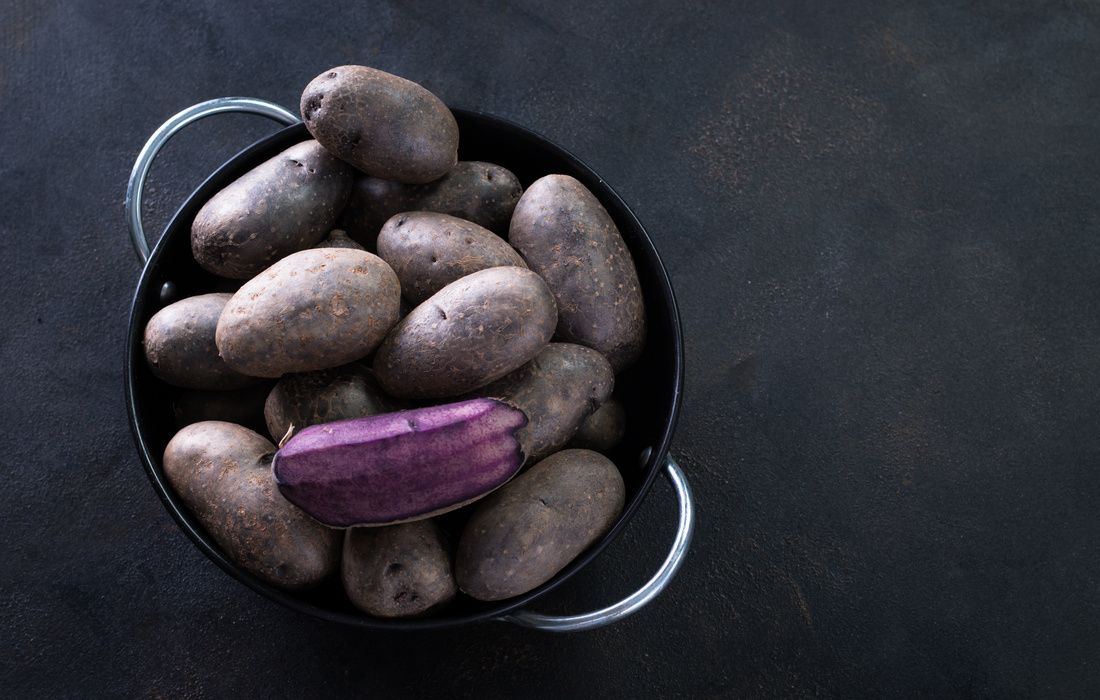
purple potatoes
Purple potatoes (Solanum tuberosum) are prized for their striking deep purple flesh, earthy flavor, and naturally vibrant color that remains attractive after cooking. Unlike yellow- or white-fleshed potatoes, their rich purple hue comes from anthocyanins, the same antioxidant polyphenols found in blueberries, blackberries, red cabbage, black rice, black beans, and elderberries. These colorful pigments not only make purple potatoes visually distinctive but also contribute to their exceptional antioxidant capacity.
Purple potatoes have a moist, creamy texture and a medium starch content, allowing them to hold their shape well while becoming tender when roasted, steamed, boiled, or grilled. Their thin, edible skins provide additional fiber and beneficial polyphenols, making them an excellent choice for sheet pan meals, potato salads, grain bowls, soups, breakfast hashes, and colorful side dishes.
Among commonly available potato varieties, purple potatoes are one of the richest sources of antioxidant phytochemicals. In addition to anthocyanins, they provide chlorogenic acid, vitamin C, potassium, and other naturally occurring polyphenols that support cellular health. Like other colorful fruits and vegetables, purple potatoes demonstrate how eating a variety of naturally pigmented plant foods helps increase dietary phytochemical diversity while adding beautiful color and flavor to everyday meals.
purple potatoes
Purple potatoes (Solanum tuberosum) are prized for their striking deep purple flesh, earthy flavor, and naturally vibrant color that remains attractive after cooking. Unlike yellow- or white-fleshed potatoes, their rich purple hue comes from anthocyanins, the same antioxidant polyphenols found in blueberries, blackberries, red cabbage, black rice, black beans, and elderberries. These colorful pigments not only make purple potatoes visually distinctive but also contribute to their exceptional antioxidant capacity.
Purple potatoes have a moist, creamy texture and a medium starch content, allowing them to hold their shape well while becoming tender when roasted, steamed, boiled, or grilled. Their thin, edible skins provide additional fiber and beneficial polyphenols, making them an excellent choice for sheet pan meals, potato salads, grain bowls, soups, breakfast hashes, and colorful side dishes.
Among commonly available potato varieties, purple potatoes are one of the richest sources of antioxidant phytochemicals. In addition to anthocyanins, they provide chlorogenic acid, vitamin C, potassium, and other naturally occurring polyphenols that support cellular health. Like other colorful fruits and vegetables, purple potatoes demonstrate how eating a variety of naturally pigmented plant foods helps increase dietary phytochemical diversity while adding beautiful color and flavor to everyday meals.