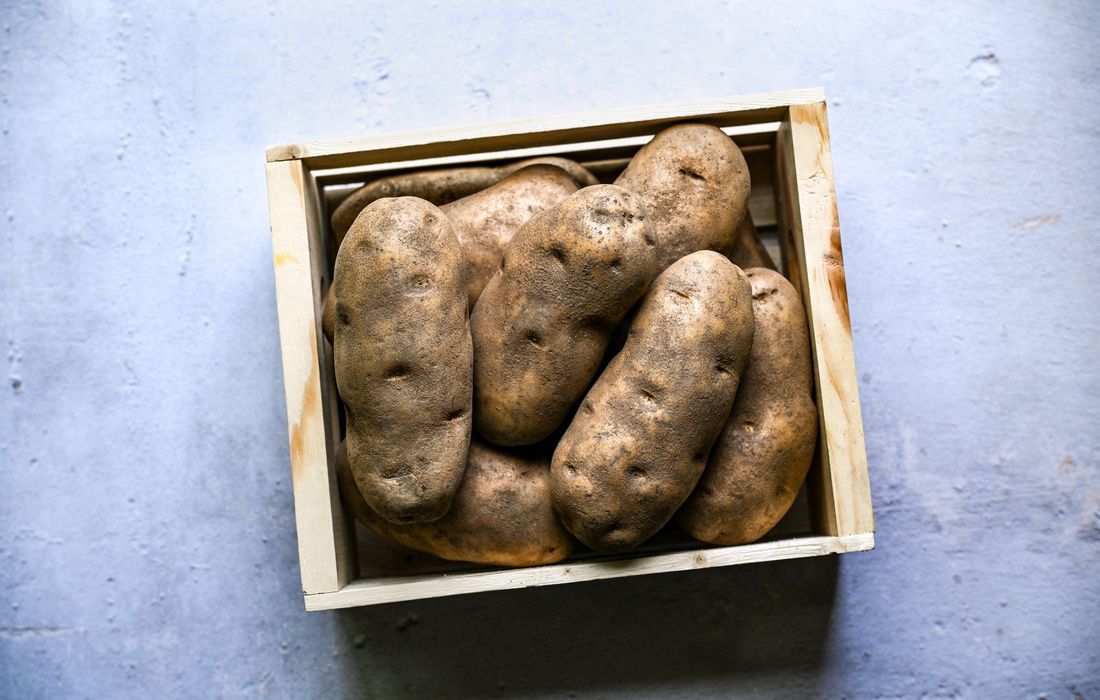
russet potatoes
Russet potatoes (Solanum tuberosum) are the classic baking potato, recognized by their rough, brown skin, elongated shape, and fluffy white interior. Their high starch content creates a light, dry texture when baked, mashed, or roasted, making them a favorite for baked potatoes, mashed potatoes, oven fries, soups, chowders, and comfort food recipes. Unlike waxy potato varieties, russets readily break down during cooking, producing the soft, airy texture that makes them ideal for mashing and baking.
Russet potatoes provide complex carbohydrates for steady energy along with vitamin C, vitamin B6, potassium, and a variety of protective plant compounds. Although their flesh is white, they still contain beneficial polyphenols—primarily chlorogenic acid—that contribute to their antioxidant activity. Like all potatoes, allowing cooked russets to cool before eating increases resistant starch, a type of fiber that supports beneficial gut bacteria.
Potatoes are among the most heavily treated vegetable crops, with conventional production often relying on synthetic fungicides during the growing season, insecticides and herbicides during cultivation, and post-harvest sprout inhibitors during storage. When available, choosing organically grown russet potatoes can help reduce exposure to these synthetic agricultural chemicals while supporting farming practices that avoid their routine use.
russet potatoes
Russet potatoes (Solanum tuberosum) are the classic baking potato, recognized by their rough, brown skin, elongated shape, and fluffy white interior. Their high starch content creates a light, dry texture when baked, mashed, or roasted, making them a favorite for baked potatoes, mashed potatoes, oven fries, soups, chowders, and comfort food recipes. Unlike waxy potato varieties, russets readily break down during cooking, producing the soft, airy texture that makes them ideal for mashing and baking.
Russet potatoes provide complex carbohydrates for steady energy along with vitamin C, vitamin B6, potassium, and a variety of protective plant compounds. Although their flesh is white, they still contain beneficial polyphenols—primarily chlorogenic acid—that contribute to their antioxidant activity. Like all potatoes, allowing cooked russets to cool before eating increases resistant starch, a type of fiber that supports beneficial gut bacteria.
Potatoes are among the most heavily treated vegetable crops, with conventional production often relying on synthetic fungicides during the growing season, insecticides and herbicides during cultivation, and post-harvest sprout inhibitors during storage. When available, choosing organically grown russet potatoes can help reduce exposure to these synthetic agricultural chemicals while supporting farming practices that avoid their routine use.