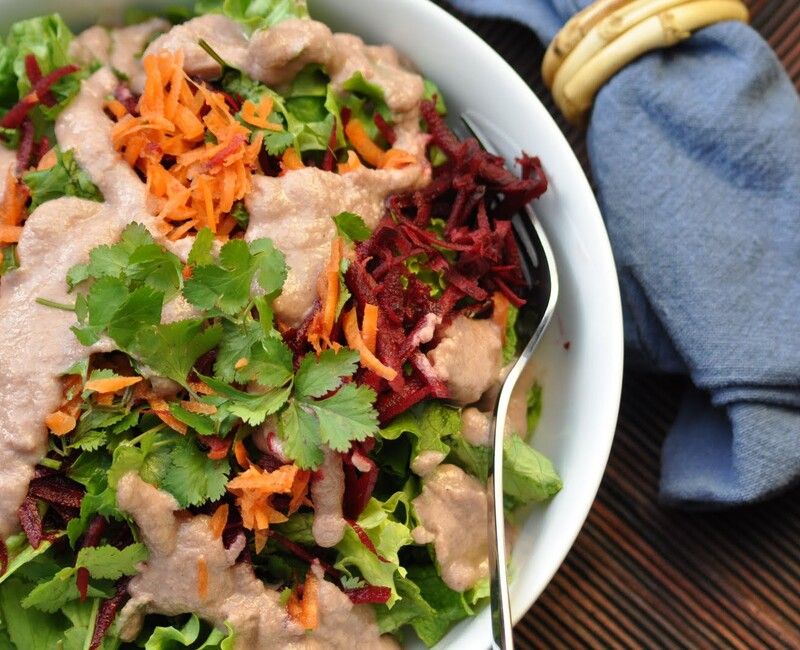
Grated Beet & Carrot Salad with Radish-Miso Dressing
Ali Segersten 14 comments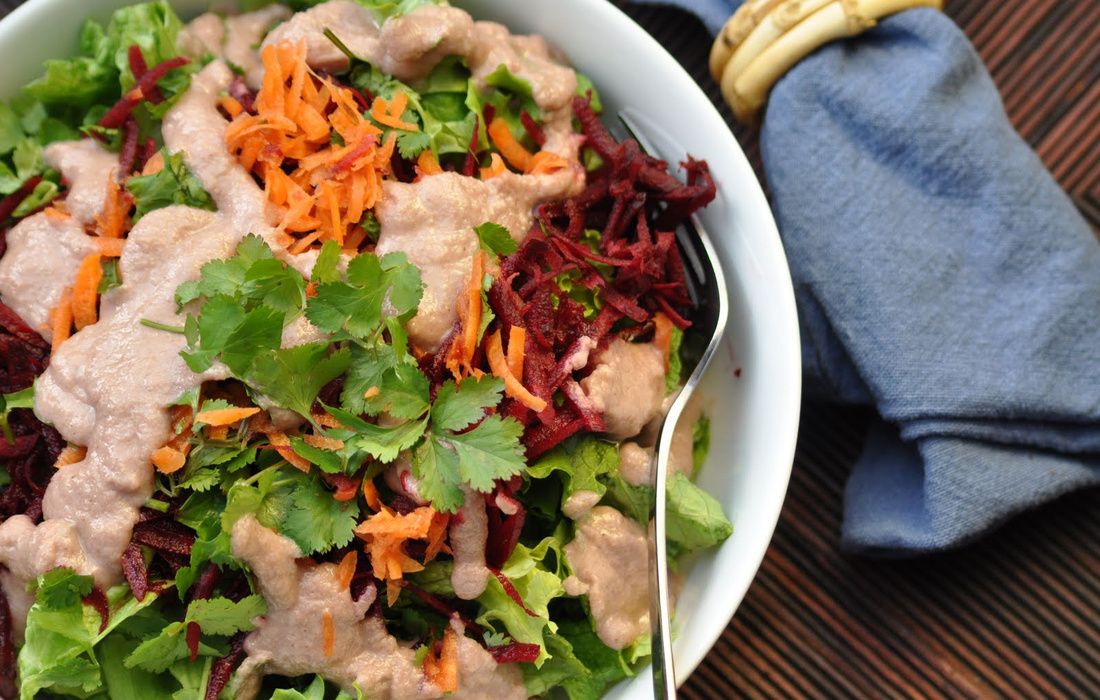
Creating delicious salad dressings on the Elimination Diet can feel limiting—especially when you're avoiding vinegar, citrus, and fruit. But healing foods always find a way to surprise us with their abundance.
This Asian-inspired dressing is both vinegar-free and citrus-free, yet full of vibrant flavor and digestive support. The inspiration came from a reader’s heartfelt email, asking for Elimination Diet recipes without any fruit. That small spark of inquiry led me into the kitchen...and then, a lightbulb moment...radishes!
Grated radishes provide a bright, peppery base that mimics the acidity we often crave in dressings—without the need for vinegar or lemon juice. When blended with Adzuki Bean Miso (a soy-free, gluten-free miso from South River Miso Company), it transforms into a creamy, savory, probiotic-rich dressing that nourishes the gut and delights the palate.
I recently demonstrated this recipe during an Elimination Diet cooking class at our local co-op, and it was a total hit. Simple, unexpected, and deeply satisfying—this dressing is one I know you'll come back to again and again.
Grated Beet and Carrot Salad with Radish-Miso Dressing
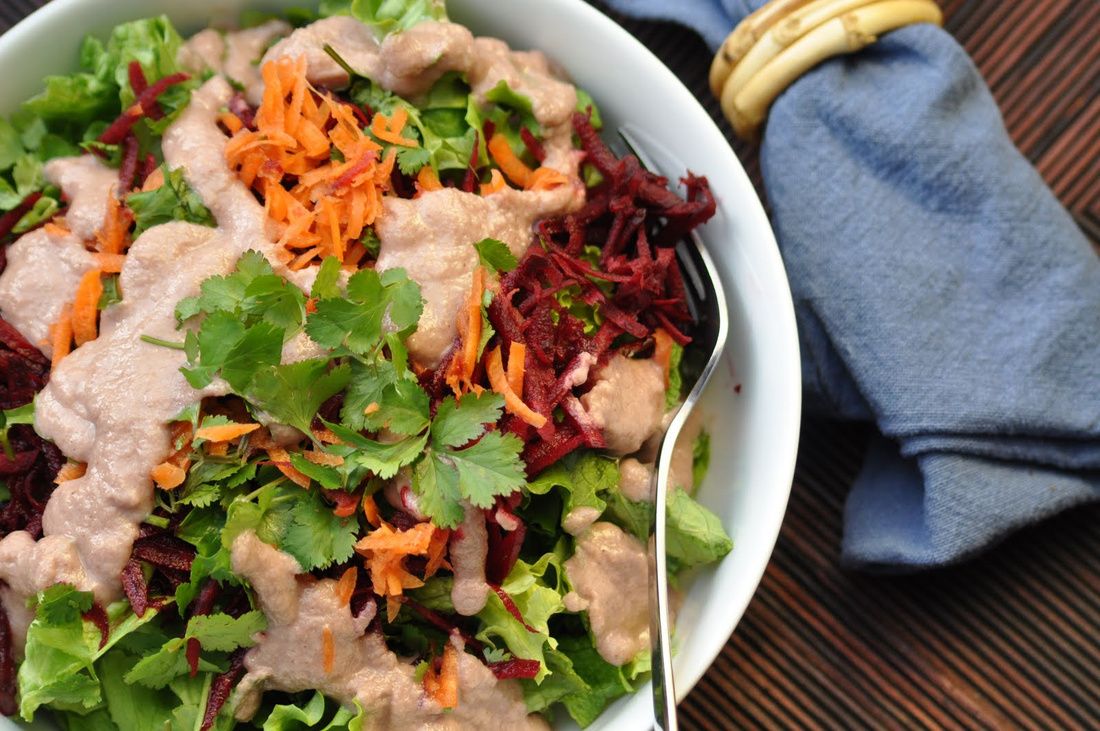
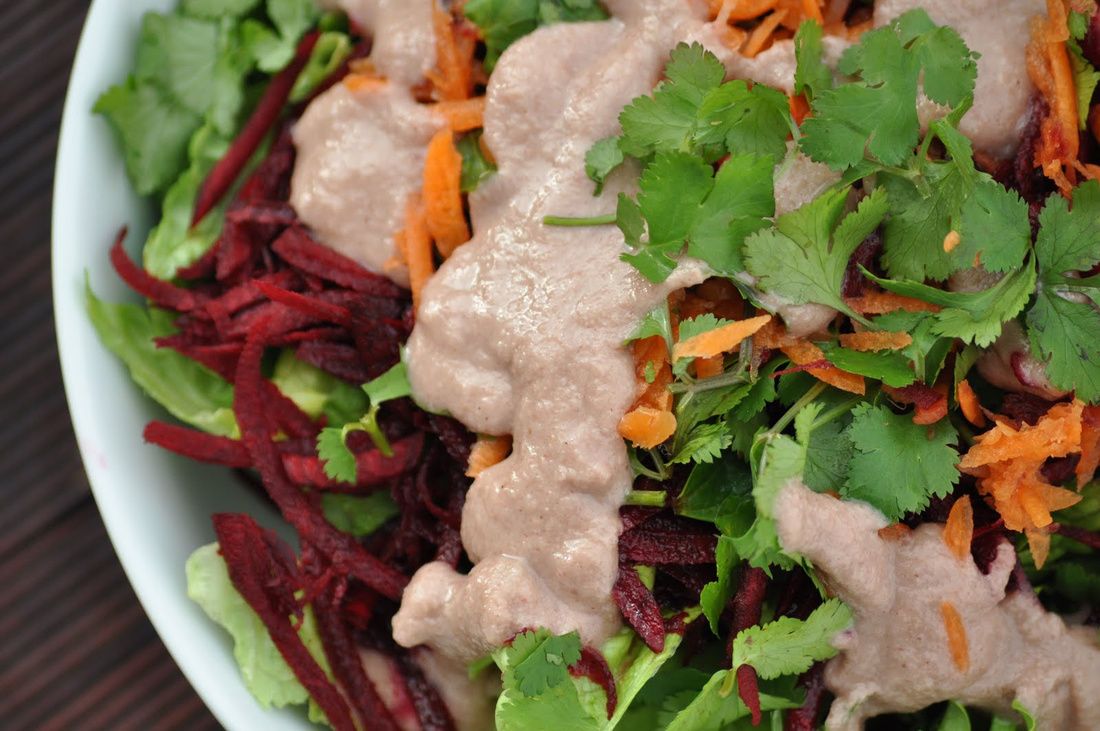
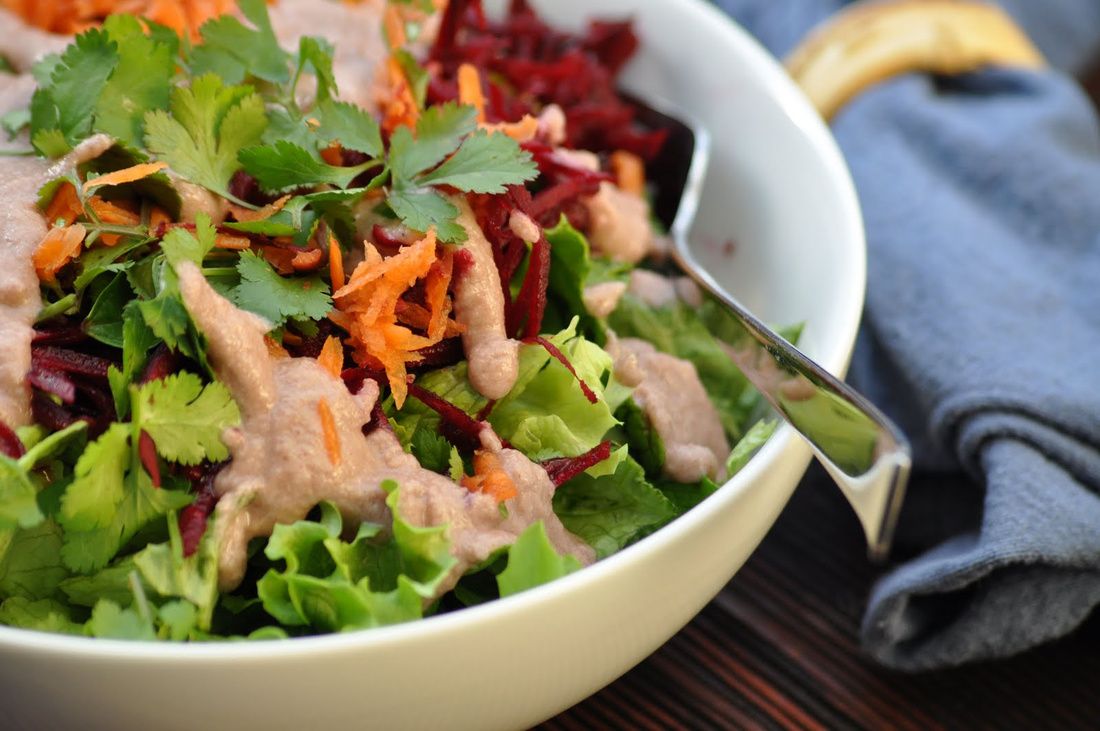
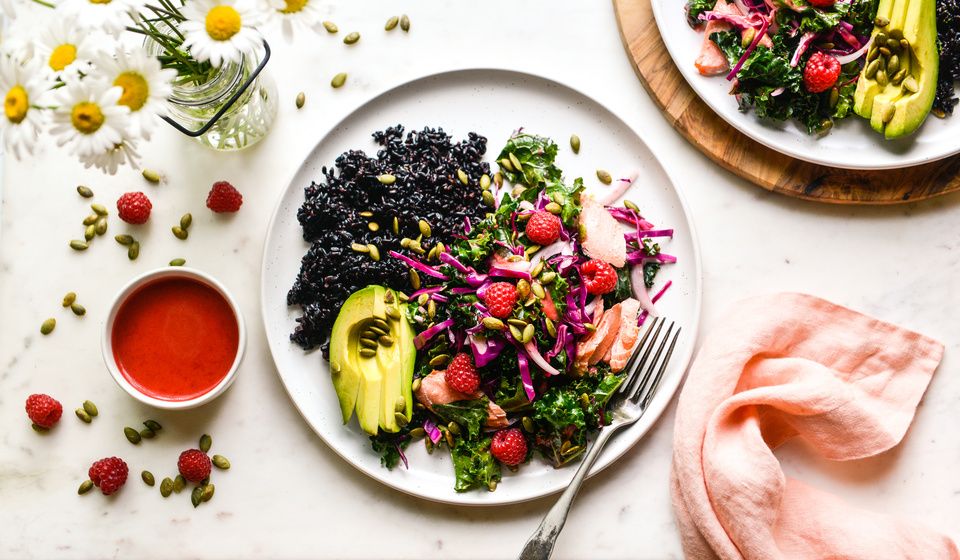
This bright, creamy dressing is vinegar-free, citrus-free, and perfect for sensitive diets, including the Elimination Diet. Add leftover cooked salmon or chicken for a balanced, nutrient-dense lunch. This recipe uses Adzuki Bean Miso, which is both soy-free and gluten-free. If unavailable, choose another miso labeled gluten-free and soy-free—just avoid varieties with “barley koji,” as they contain gluten.
Add about one cup of cooked arame or hijiki (sea vegetables) for added nutrients and minerals.
Salad
Dressing
- Place the lettuce into a large salad bowl and top with the grated beets, carrots, and cilantro.
- To make the dressing add all ingredients to your blender and blend until smooth and creamy. The dressing will be a slight pink color.
- Dressing can be kept in a glass jar in the fridge for up to a week.
Use this recipe in our Meal Planner

About the Author
Alissa Segersten, MS, CN
Alissa Segersten, MS, CN, is the founder of Nourishing Meals®, an online meal-planning membership with over 2,000 nourishing recipes and tools to support dietary change and better health. As a functional nutritionist, professional recipe developer, author of The Whole Life Nutrition Cookbook and Nourishing Meals, and co-author of The Elimination Diet, she helps people overcome health challenges through food. A mother of five, Alissa understands the importance of creating nutrient-dense meals for the whole family. Rooted in science and deep nourishment, her work makes healthy eating accessible, empowering thousands to transform their well-being through food.Nourishing Meals Newsletter
Email updates.
Comments
Your blog is fantastic... full of healthy and original recipes that just make you want to cook! Great job! I'll be following along :)
Okay, I'll admit that I was a bit skeptical about using radishes in salad dressing. Radishes *and* miso just sounded a little too different, so I didn't make it until I happened to notice that our market does carry South River Adzuki miso. In need of a new food for phase one, I decided to give it a go, and I am now addicted to it. I like it more than any other salad dressing I've ever made. The beet/carrot/greens/cilantro mix with it is just divine with a bit of cooked salmon. I love-love-love it. It's a good thing we've got lots of radishes growing! :-)
Ali, you and I are on the same page, seriously, everything you've been making lately is so similar to what I've been making in my own kitchen! The azuki yam hash ,this salad, wow, i think we are totally food connected... Looks great, as always - great dressing idea with the radishes. And I just cracked open a fresh jar of the miso today, and planned on making a salad dressing for my salad at dinner tonight. Weird, I tell you, weird. :)
Kim || www.affairsofliving.com
Ali,
This salad is really good. Love the dressing!
Thanks..
Anon - Eat regularly, and add more protein and fat into your daily meals. It is totally normal to feel this way after a day smoothies and juice. There is a very broad range of feelings with this diet; some feel fantastic the first week and some feel awful. :)
Katie - Penzey's spices are gluten-free (but unfortunately not organic).
Ali,
Since I am very sensitive to gluten, I am concerned about cross contamination with spices. Can you tell me a brand of spices that is certainly gluten free? Thank you!
Katie
ok...i'm on day 3 and am feeling woozy: very ditzy, tired and worn. i haven't tried the salmon yet and am hoping that phase 1 foods will help boost me up. anyone else out there feeling the same? any suggestions?
Thanks gals!
Check your local health food store or Whole Foods. South River's chickpea miso might work as a replacement.
Happy cooking! -Ali :)
Hi there, I just went to the south river site to order the miso but they are out of stock. Do you know of another place to purchase this product? Thanks in advance.
-S
I was at the class Monday night and can whole-heartedly agree that this salad was amazing! I'm going to get some of the miso today. Thank you for sharing it!
Wow, looks so pretty. Wish I could get someone around here to eat like that.
Funny you should mention protein, Ali. I'm on Phase 1 & must've been needing some protein. A co-worker brought home-smoked wild salmon to work yesterday & I didn't hesitate--it was delicious!
You always have colorful, beautiful dishes, but they are seeming especially so with the elimination diet recipes. Love that! :-) Thanks for the info on the miso, too.
Shirley

This salad dressing sounds great! I've been on a real salad kick lately and like to find new, original ideas. Thanks!