Sleepytime Herbal Tea Recipe
Ali Segersten
A warm cup of herbal tea in the evening gently tells your nervous system that the day is complete. Heat, aroma, and familiar flavors activate the parasympathetic response, helping cortisol fall and melatonin rise naturally.
Unlike sleep aids that push the body into sedation, calming herbs work by lowering neural noise and restoring a sense of safety. When the nervous system is supported, sleep can emerge organically.
This sleepytime herbal blend brings together traditional nervines and calming botanicals that help the body soften, the mind slow, and the stress response unwind.
Below, you’ll learn how each herb in this blend gently guides the body toward rest.
How These Herbs Support Sleep
Passionflower and other calming herbs have been used for centuries to support the nervous system and the transition into deep sleep.
Skullcap (Scutellaria lateriflora)
Skullcap is a classic nervine tonic, traditionally used for nervous exhaustion, restlessness, and racing thoughts. Research suggests skullcap contains flavonoids that interact with GABAergic pathways, helping reduce excessive neural firing without sedation. This makes it especially helpful for sleep difficulties rooted in stress and overactivation rather than true fatigue.
Research highlights:
– Flavonoids in Scutellaria species demonstrate anxiolytic and neuro-protective activity.
– Traditionally classified as a trophorestorative for the nervous system.
Passionflower (Passiflora incarnata)
Passionflower is well-studied for its ability to support GABA signaling, helping quiet mental chatter and ease the transition into sleep. Clinical trials have shown passionflower extracts can improve sleep quality and reduce sleep-onset latency without next-day grogginess.
Research highlights:
– Randomized controlled trials show improved subjective sleep quality with passionflower tea.
– Demonstrates GABA-modulating and anxiolytic effects.
Lemon Balm (Melissa officinalis)
Lemon balm gently calms the nervous system while also supporting mood and emotional balance. It’s especially helpful when sleep disruption is tied to anxiety, rumination, or digestive discomfort. Lemon balm has been shown to enhance GABA activity by inhibiting GABA transaminase—the enzyme that breaks GABA down.
Research highlights:
– Demonstrated anxiolytic and sleep-supportive effects in human studies.
– Traditionally used for nervous tension and stress-related insomnia.
Chamomile (Matricaria chamomilla)
Chamomile contains apigenin, a flavonoid that binds to benzodiazepine receptors on GABA-A receptors, promoting relaxation without sedation. Chamomile is particularly useful for people who hold stress in the body—tight muscles, shallow breathing, or digestive tension.
Research highlights:
– Apigenin exhibits anxiolytic effects via GABA receptor modulation.
– Clinical trials suggest chamomile tea can gently improve sleep quality and mood.
Lemongrass (Cymbopogon citratus)
While not a sedative, lemongrass provides gentle nervous system support by easing digestive tension and reducing inflammation, two often overlooked contributors to poor sleep. Its bright, citrusy aroma also makes the blend feel extra soothing and flavorful.
Research highlights:
– Demonstrates mild anxiolytic effects.
– Exhibits muscle-relaxing and antispasmodic activity, particularly in digestive smooth muscle.
– Traditionally used to support digestion and relaxation.
Optional Additions: Rose Petals & Orange Peel
The aroma of rose and dried orange peel engages the brain’s limbic system, where scent information helps regulate emotion, memory, and the stress response. Sensory cues play a meaningful role in nervous system regulation, especially when used consistently as part of an evening ritual.
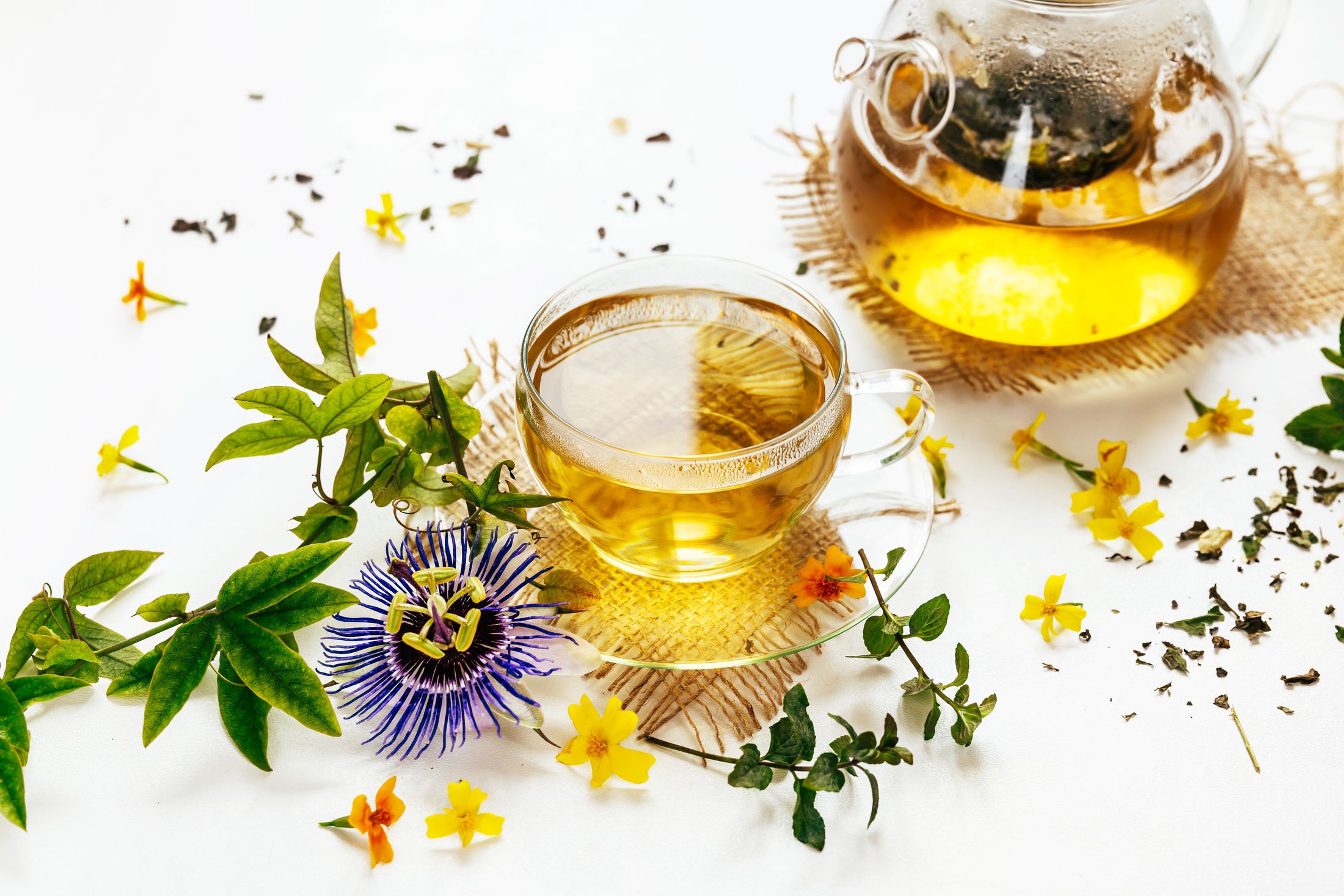
Sleepytime Tea Blend
This gentle herbal blend is designed to help the nervous system soften and downshift at the end of the day. These herbs work together to calm excess neural activity, ease muscle tension, quiet looping thoughts, and support the body’s natural transition into rest. Skullcap and passionflower are classic nervines, and especially helpful for tired-but-wired evenings when the mind won’t shut off. Lemon balm gently lifts mental tension and supports emotional calm, while chamomile brings a subtle, grounding relaxation that helps the body feel safe enough to let go. Lemongrass adds a light, uplifting note and supports digestion, which is often overlooked in sleep support. Optional rose petals and dried orange peel add a soft aromatic layer that engages the senses and signals closure to the day, turning this tea into a true evening ritual.
Ingredients:
- 1 tablespoon dried skullcap
- 1 tablespoon dried passionflower
- 1 tablespoon dried lemon balm
- 1 tablespoon dried chamomile flowers
- 1 tablespoon dried lemongrass
Optional additions:
- 1 tablespoon dried organic rosebuds
- 2 teaspoons dried organic orange peel
How to Prepare (Quart Jar Method):
- Add all dried herbs to a quart-size glass mason jar.
- Pour boiling filtered water over the herbs, filling the jar nearly to the top (leave ~½ inch).
- Cover with a lid (or parchment + lid if using metal).
- Steep 15 to 25 minutes for gentle calming (or up to 40 minutes for deeper nervous system support).
- Strain using a small fine mesh strainer into a mug and sip warm.
How to Use:
- Drink 1 to 2 cups in the evening, about 45 to 90 minutes before bed.
- Remaining tea can be stored in the fridge for up to 24 hours and gently reheated.
Where to Buy the Herbs:
Most of these dried herbs can be found in bulk at your local herb store or health food store. If you can't find them locally. Use the links below to purchase online:
- Dried Passionflower
- Dried Chamomile
- Dried Lemon Balm
- Dried Scullcap
- Dried Lemongrass
- Dried Rosebuds
- Dried Orange Peel
More Sleep Support:
When calming herbs are used consistently, they help create the internal conditions that allow sleep to deepen naturally.
If you’d like to go deeper into nourishing sleep from the inside out, explore these next:
Gift #10: The Power of Restorative Sleep →
Learn how sleep architecture, circadian rhythm, and nourishment work together to restore hormones, tissues, and emotional balance.
Why Magnesium Matters for Sleep →
Discover how magnesium helps quiet the stress response, soften muscle tension, and support the nervous system’s natural ability to settle into deep sleep.
How Food Sensitivities Can Disrupt Sleep →
Understand how hidden immune reactions can trigger nighttime cortisol spikes and restless sleep.
Meal Timing, Blood Sugar, and Circadian Rhythm →
Discover how strategic nourishment throughout the day signals safety and supports melatonin at night.
References:
Awad, R., Arnason, J. T., Trudeau, V., Bergeron, C., Budzinski, J. W., Foster, B. C., & Merali, Z. (2003). Phytochemical and biological analysis of skullcap (Scutellaria lateriflora L.): a medicinal plant with anxiolytic properties. Phytomedicine : international journal of phytotherapy and phytopharmacology, 10(8), 640–649. https://doi.org/10.1078/0944-7113-00374
Chang, S. M., & Chen, C. H. (2016). Effects of an intervention with drinking chamomile tea on sleep quality and depression in sleep disturbed postnatal women: a randomized controlled trial. Journal of advanced nursing, 72(2), 306–315. https://doi.org/10.1111/jan.12836
Gao, X., Hu, Y., Tao, Y., Liu, S., Chen, H., Li, J., Zhao, Y., Sheng, J., Tian, Y., & Fan, Y. (2022). Cymbopogon citratus (DC.) Stapf aqueous extract ameliorates loperamide-induced constipation in mice by promoting gastrointestinal motility and regulating the gut microbiota. Frontiers in microbiology, 13, 1017804. https://doi.org/10.3389/fmicb.2022.1017804
Ibarra, A., Feuillere, N., Roller, M., Lesburgere, E., & Beracochea, D. (2010). Effects of chronic administration of Melissa officinalis L. extract on anxiety-like reactivity and on circadian and exploratory activities in mice. Phytomedicine : international journal of phytotherapy and phytopharmacology, 17(6), 397–403. https://doi.org/10.1016/j.phymed.2010.01.012
Janda, K., Wojtkowska, K., Jakubczyk, K., Antoniewicz, J., & Skonieczna-Żydecka, K. (2020). Passiflora incarnata in Neuropsychiatric Disorders-A Systematic Review. Nutrients, 12(12), 3894. https://doi.org/10.3390/nu12123894
Kazemi, A., Shojaei-Zarghani, S., Eskandarzadeh, P., & Hashempur, M. H. (2024). Effects of chamomile (Matricaria chamomilla L.) on sleep: A systematic review and meta-analysis of clinical trials. Complementary therapies in medicine, 84, 103071. https://doi.org/10.1016/j.ctim.2024.103071
Kennedy, D. O., Little, W., & Scholey, A. B. (2004). Attenuation of laboratory-induced stress in humans after acute administration of Melissa officinalis (Lemon Balm). Psychosomatic medicine, 66(4), 607–613. https://doi.org/10.1097/01.psy.0000132877.72833.71
Ngan, A., & Conduit, R. (2011). A double-blind, placebo-controlled investigation of the effects of Passiflora incarnata (passionflower) herbal tea on subjective sleep quality. Phytotherapy research : PTR, 25(8), 1153–1159. https://doi.org/10.1002/ptr.3400
Si, L., An, Y., Zhou, J., & Lai, Y. (2024). Neuroprotective effects of baicalin and baicalein on the central nervous system and the underlying mechanisms. Heliyon, 11(1), e41002. https://doi.org/10.1016/j.heliyon.2024.e41002

About the Author
Alissa Segersten, MS, CN
Alissa Segersten, MS, CN, is the founder of Nourishing Meals®, an online meal-planning membership with over 2,000 nourishing recipes and tools to support dietary change and better health. As a functional nutritionist, professional recipe developer, author of The Whole Life Nutrition Cookbook and Nourishing Meals, and co-author of The Elimination Diet, she helps people overcome health challenges through food. A mother of five, Alissa understands the importance of creating nutrient-dense meals for the whole family. Rooted in science and deep nourishment, her work makes healthy eating accessible, empowering thousands to transform their well-being through food.Nourishing Meals Newsletter
Email updates.


Add Comment