Thai food
Vegetable Panang Curry
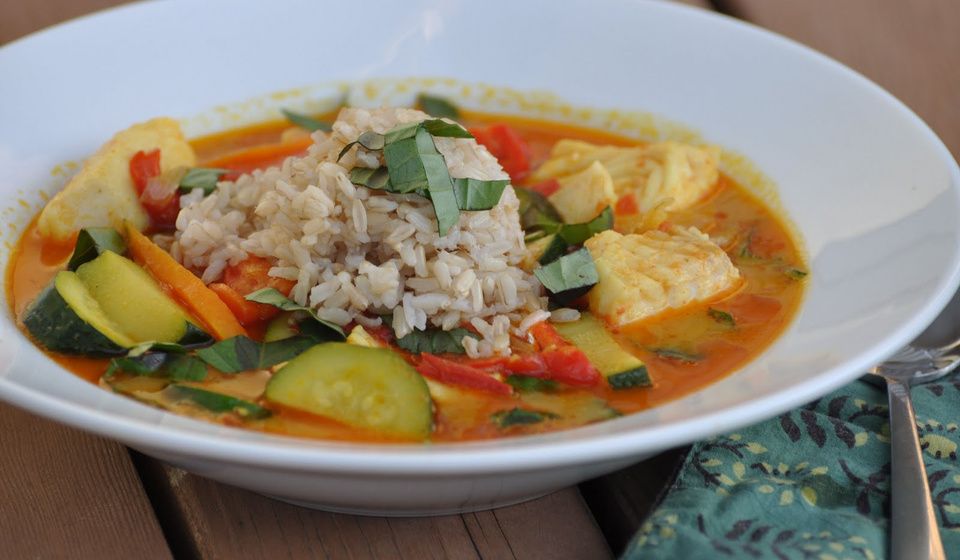
Panang curry is one of my favorite types of Thai curries. It is deeply flavored with spicy chili paste, hints of lime, and a nutty richness from the peanut butter. It is best to find a good quality panang curry paste for this recipe. Look for one at your local food co-op or health food store. Panang curry paste is typically made from Thai red chilies, shallots, lemongrass, garlic, coriander, galangal (Thai ginger), kaffir lime peel, cumin, and sea salt. If you would like more protein, feel free to add some cubed tofu, cooked chickpeas, or cubed halibut to the curry. If adding fish, add it when you add the broccoli and zucchini as it only takes a few minutes to cook.
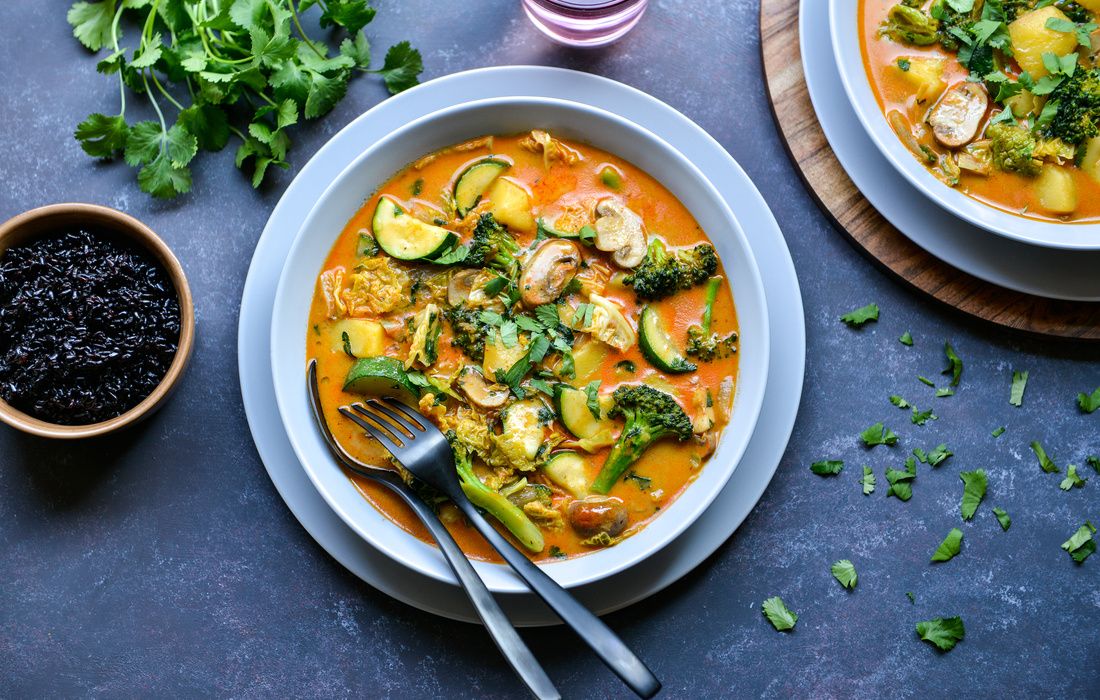
Panang curry is one of my favorite types of Thai curries. It is deeply flavored with spicy chili paste, hints of lime, and a nutty richness from the peanut butter. It is best to find a good quality panang curry paste for this recipe. Look for one at your local food co-op or health food store.
Panang curry paste is typically made from Thai red chilies, shallots, lemongrass, garlic, coriander, galangal (Thai ginger), kaffir lime peel, cumin, and sea salt. Some brands may contain shrimp paste, so read labels. This is one of my favorite brands of organic Thai curry pastes.
The key to making really good curries is to first sauté the curry paste in oil. This brings out all of the flavors. I usually sauté the onion first (if using in a recipe), and then add the curry paste, then the liquids. This creates a solid foundation with an incredible depth of flavor. You also want to be very careful not to overcook the vegetables! Timing will depend on the sizes of your cut veggies, so watch them carefully. You'll want them in the crisp-tender stage when you turn off the heat, as they will continue to cook in the hot liquid after the curry is done cooking.
If you would like more protein, feel free to add some cubed tofu, cooked chickpeas, or cubed halibut to the curry. If adding fish, add it when you add the broccoli and zucchini as it only takes a few minutes to cook. If you are on a vegan or vegetarian diet, replace the fish sauce with either coconut aminos or wheat-free tamari.
Recipe from the Meal Planner
Vegetable Panang Curry
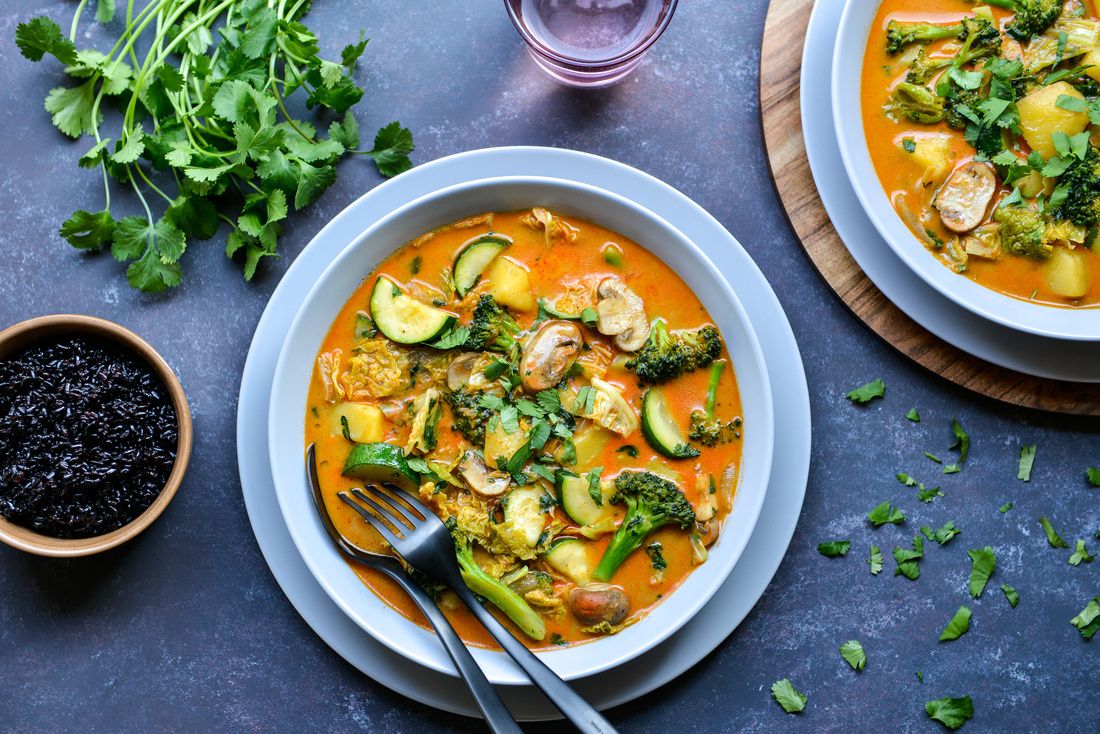
Thai panang curry is so easy to make at home, all you need is a high-quality panang curry paste—look for one at your local health food store. Any vegetables can be used in this recipe. Try chopped cauliflower, bell peppers, sweet potatoes, or green beans. Serve with Black Rice or White Rice.
- Heat a 4-quart pot over medium heat. Add the oil, then add the onion. Sauté for about 5 minutes.
- Add the curry paste and sauté a minute or so more.
- Add the stock, coconut milk, peanut butter, and fish sauce. Break up the peanut butter with a spatula.
- Add the potatoes and mushrooms; cover and simmer for about 10 minutes. You want the potatoes partially cooked at this point.
- Then add the broccoli, zucchini, and cabbage. Simmer for another 5 minutes or so. The veggies should be crisp tender and the potatoes cooked through (but not mushy).
- Turn off the heat, taste and add salt or more fish sauce if needed. Stir in the cilantro and serve!
- Serve with lime wedges and cooked rice if desired.
Add this recipe to your meal plan
Create your diet profile to filter recipes for your dietary needs. Save this recipe to your collection, add it to your calendar, and combine its ingredients with your other planned meals in one organized shopping list.
 More about Alissa
3 Comments
Read commentsOur whole family really enjoyed this curry. Thanks for the recipe!
In reply to Our whole family really… by Lindsey (visitor)
Thanks Lindsey! So glad you enjoyed it! :)
I'm a little confused by…
I'm a little confused by this recipe. Avocado oil? Basmati rice? I love both of these, but neither belongs in Thai cooking. The cooking method is also very western. You should start by frying the curry paste in the cream scooped from the top of the coconut milk can, then add the other ingredients and simmer until just cooked through. Serve with Jasmin rice (or sticky rice for a Northern Thai/Laotian treat.)