Tulsi Tea: A Daily Ritual for Nervous System Resilience
Ali Segersten
When the body has been under stress for a long time, it doesn’t immediately relax just because the stressor is gone. Cortisol rhythms can remain disrupted, keeping the nervous system in a low-grade state of alert.
This is where gentle, consistent signals of safety matter. Tulsi (holy basil) tea is one of those signals.
Tulsi has been revered across cultures for centuries, not only as a medicinal herb but as a plant associated with protection, balance, and daily nourishment. Traditionally grown close to the home and prepared as teas or simple extracts, tulsi was used to support resilience—physically, emotionally, and spiritually. This long history of everyday use reflects what modern research now confirms, tulsi gently supports the body’s ability to adapt to stress.
Why Tulsi Supports the Stress Response and Cortisol Balance
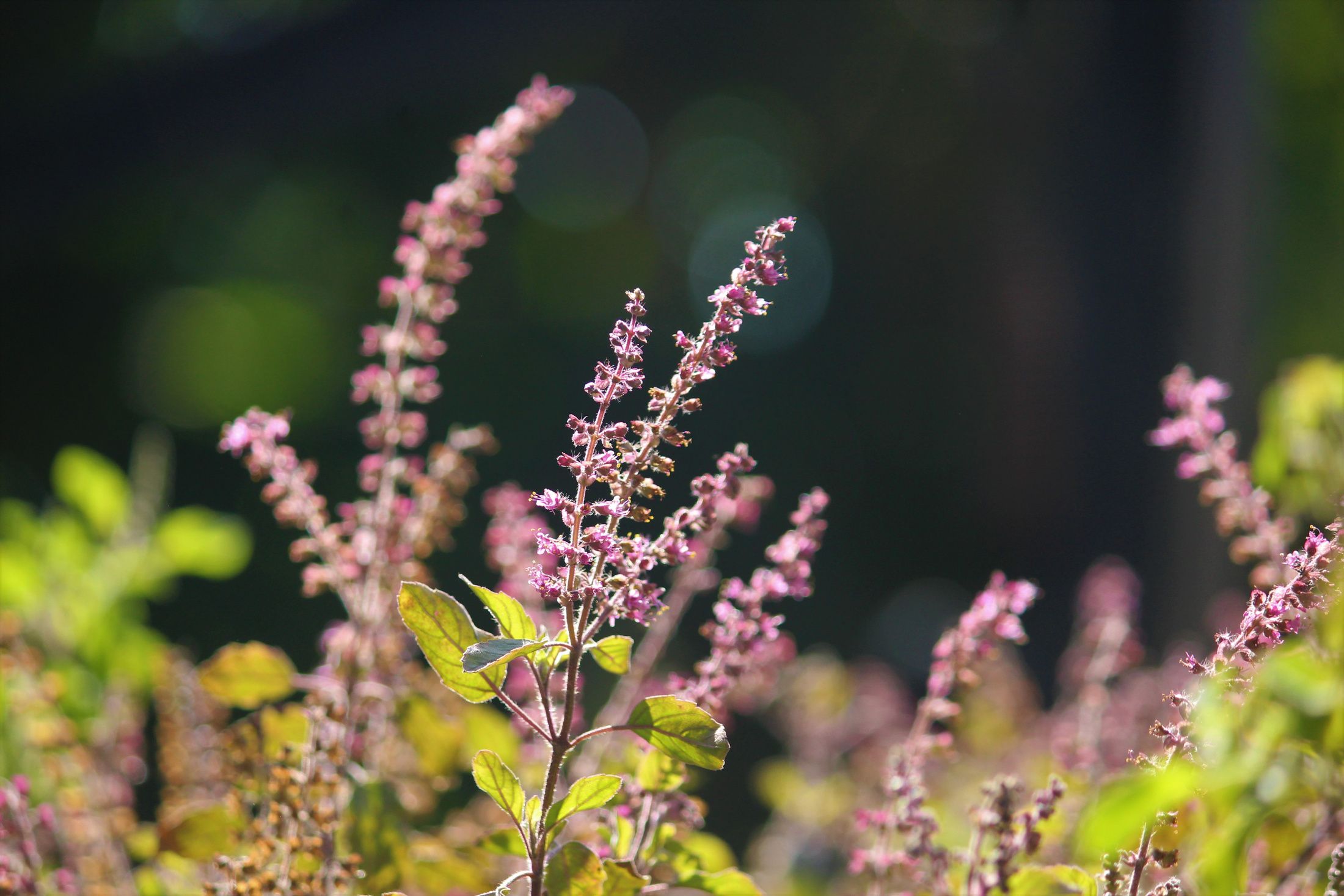
Tulsi (Ocimum sanctum or Ocimum tenuiflorum) is classified as an adaptogenic herb, meaning it helps the body adapt to stress without overstimulating or suppressing the nervous system.
Research shows that tulsi helps regulate stress physiology by modulating cortisol and HPA-axis signaling, improving resilience to both physical and emotional stress. Its anti-inflammatory and antioxidant effects further reduce stress signals coming from the immune system, while supporting mental clarity and emotional balance.
Because tulsi supports balance rather than pushing the system in one direction, it can be used any time of day—including during periods of adrenal or nervous system sensitivity. By reducing background stress signaling and supporting nervous system flexibility, tulsi helps cortisol return to a more natural rhythm, allowing the body to shift out of persistent alertness and into repair.
In practical terms, tulsi supports the nervous system by:
- Modulating cortisol and stress-related signaling without overstimulation
- Supporting healthy HPA-axis regulation and adaptability
- Reducing inflammatory signaling that feeds the stress response
- Promoting mental clarity and emotional balance
- Supporting daily rhythm and nervous system flexibility
Tulsi is a staple in my own daily rhythm. I grow this herb in my garden every year. It’s incredibly easy to cultivate and thrives with very little effort. I drink tulsi tea most afternoons as a gentle pause in the day, often blending it with mint, ginger, or nettles depending on what my body needs.
Unlike caffeine or sedative herbs, tulsi works by restoring balance. This makes it appropriate any time of day, including during periods of adrenal or nervous system sensitivity.
Warm Tea as a Nervous System Signal
Beyond the herb itself, warm tea is physiologically calming.
Slowly sipping a warm beverage stimulates vagal afferent pathways in the throat and digestive tract, encouraging parasympathetic (“rest-and-digest”) activity. This gentle activation helps calm inflammatory signaling and allows cortisol to downshift naturally.
Warmth, rhythm, and pause are all cues of safety. Over time, repeated experiences of safety help recalibrate the stress response more effectively than forceful interventions.
This is one reason tea rituals are associated with calm across cultures. It’s not just psychological, it’s biological.
Simple Ways to Use Tulsi Tea
- Any time of day: Tulsi is non-stimulating and non-sedating
- For digestion: Add a ginger tea bag to support motility and reduce stress-related digestive slowing
- In the evening: Combine with chamomile to support nervous system settling and nighttime cortisol decline
- As a ritual: Sip slowly, without multitasking, to reinforce parasympathetic activation
Tulsi is widely available and easy to incorporate. You can find dried tulsi or tulsi tea bags online or at most health food stores. If you prefer convenience, Organic India makes high-quality, organic tulsi tea bags that are simple to use and travel well. In fact, they have quite a few delicious tulsi herbal blends including, hibiscus, lemon-ginger, and rose. As well as, tulsi peppermint, tulsi moringa, and tulsi turmeric-ginger, however, the "original" is my favorite.
A Small Practice That Adds Up
Regulating cortisol isn’t about eliminating stress, it’s about restoring adaptability.
Tulsi tea offers a simple, daily way to tell your nervous system: I'm safe.
When the body receives that message consistently, cortisol rhythm, inflammation, digestion, and energy begin to reorganize naturally. If you’re working through Gift #11: Restore Balance by Regulating Cortisol, this is one small ritual that supports the bigger shift.
If cortisol tends to stay elevated—especially in the evening—additional herbal support can be helpful. A thoughtfully formulated tea designed to support cortisol regulation can complement a daily tulsi practice. My friends at Loose Leaf Tea Company offer a cortisol-supportive tea blend intended for evening use, to support the natural nighttime decline of cortisol and promote a calmer transition into sleep.
Paired with regular tulsi tea during the day, this kind of support can help reinforce healthier cortisol rhythms, support deeper sleep, and improve the body’s ability to respond to stress with more flexibility.
References:
C M, M. G., Murugan, S. K., Bethapudi, B., Purusothaman, D., Mundkinajeddu, D., & D'Souza, P. (2023). Ocimum tenuiflorum extract (HOLIXERTM): Possible effects on hypothalamic-pituitary-adrenal (HPA) axis in modulating stress. PloS one, 18(5), e0285012. https://doi.org/10.1371/journal.pone.0285012
Cohen M. M. (2014). Tulsi - Ocimum sanctum: A herb for all reasons. Journal of Ayurveda and integrative medicine, 5(4), 251–259. https://doi.org/10.4103/0975-9476.146554
Jamshidi, N., & Cohen, M. M. (2017). The Clinical Efficacy and Safety of Tulsi in Humans: A Systematic Review of the Literature. Evidence-based complementary and alternative medicine : eCAM, 2017, 9217567. https://doi.org/10.1155/2017/9217567
Lopresti, A. L., Smith, S. J., Metse, A. P., & Drummond, P. D. (2022). A randomized, double-blind, placebo-controlled trial investigating the effects of an Ocimum tenuiflorum (Holy Basil) extract (HolixerTM) on stress, mood, and sleep in adults experiencing stress. Frontiers in nutrition, 9, 965130. https://doi.org/10.3389/fnut.2022.965130
Saxena, R. C., Singh, R., Kumar, P., Negi, M. P., Saxena, V. S., Geetharani, P., Allan, J. J., & Venkateshwarlu, K. (2012). Efficacy of an Extract of Ocimum tenuiflorum (OciBest) in the Management of General Stress: A Double-Blind, Placebo-Controlled Study. Evidence-based complementary and alternative medicine : eCAM, 2012, 894509. https://doi.org/10.1155/2012/894509

About the Author
Alissa Segersten, MS, CN
Alissa Segersten, MS, CN, is the founder of Nourishing Meals®, an online meal-planning membership with over 2,000 nourishing recipes and tools to support dietary change and better health. As a functional nutritionist, professional recipe developer, author of The Whole Life Nutrition Cookbook and Nourishing Meals, and co-author of The Elimination Diet, she helps people overcome health challenges through food. A mother of five, Alissa understands the importance of creating nutrient-dense meals for the whole family. Rooted in science and deep nourishment, her work makes healthy eating accessible, empowering thousands to transform their well-being through food.Nourishing Meals Newsletter
Email updates.





Add Comment